Mechanics 3 min read
The simple science of quartz watches
Learn how a battery, a tiny crystal and a simple circuit work together to keep your quartz watch running with highly reliable accuracy every day.
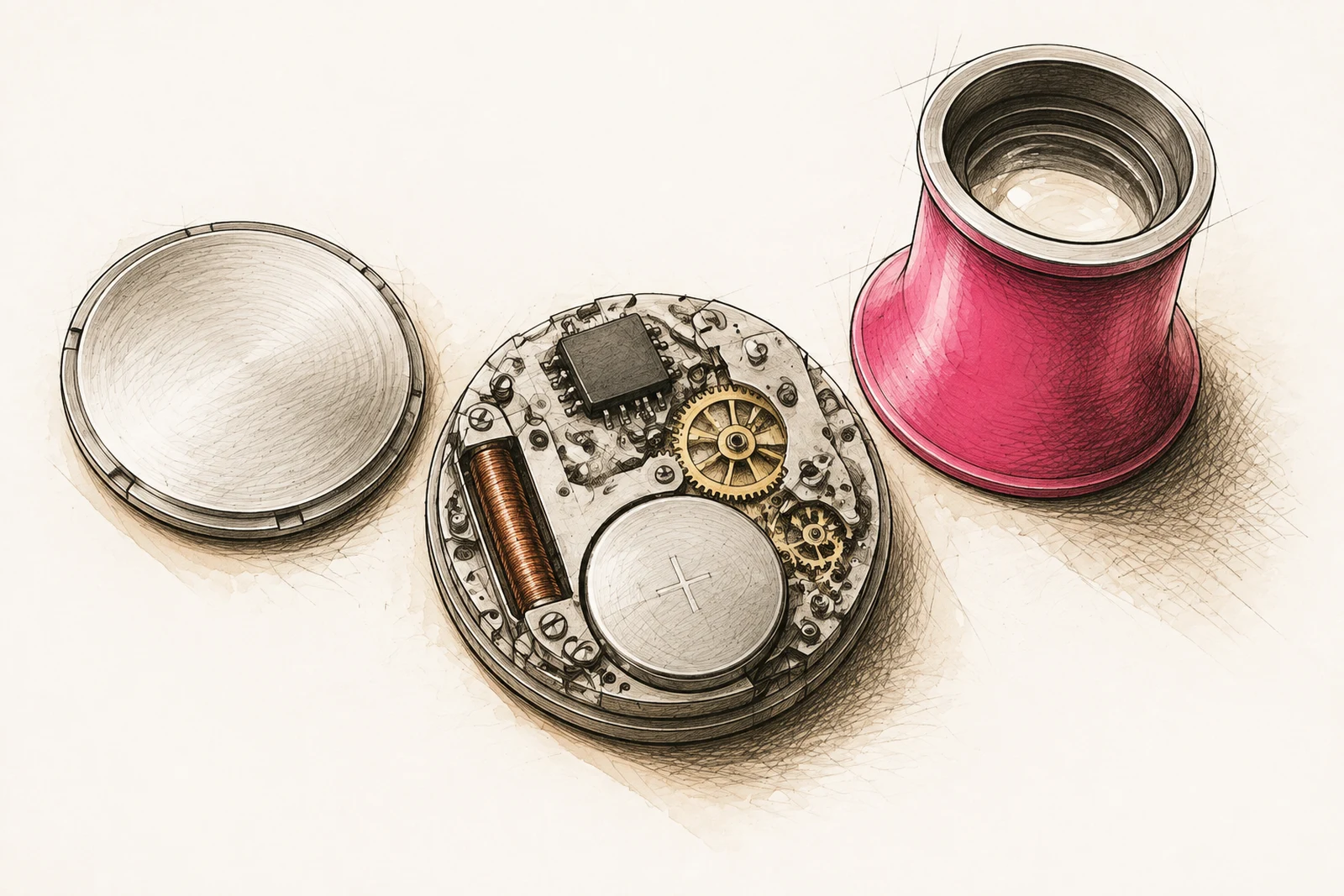
The main parts inside your watch
A quartz watch relies on a simple, elegant partnership between a battery, a quartz crystal and a tiny circuit. The battery acts as the power source, sending a steady flow of electricity to the crystal. When electricity touches this tiny piece of quartz, the crystal vibrates. These vibrations are incredibly steady, functioning like a tuning fork that always plays the exact same note without fading.
The circuit detects these vibrations and uses them to measure time, moving the watch hands forward at a steady pace. This straightforward design makes quartz watches highly reliable for daily wear, requiring very little attention from the owner.
The steady heartbeat of quartz
Inside the watch, the tiny quartz crystal is shaped like a miniature tuning fork. When the electric current from the battery passes through it, the crystal vibrates at a specific frequency of 32768 times per second. This number, 32768, is chosen because it is easy for the microchip in the circuit to divide down until it equals exactly one pulse per second.
This steady vibration is like a pendulum in a grandfather clock, keeping time with absolute consistency. The circuit translates this rapid buzzing into the single, quiet tick that you see on the dial, ensuring the second hand moves precisely when it should.
Quartz versus mechanical movements
Quartz watches are highly valued for their precision. While we love the craftsmanship of traditional watches, a quartz watch is far more accurate than a mechanical model. A typical quartz watch has an accuracy of 10 to 15 seconds per month. In comparison, even highly crafted mechanical movements can drift by several seconds every day.
Currently, quartz watches make up 35 percent of the movement market, while automatic watches account for 55 percent. To understand the traditional alternative and how it compares to your battery-powered timepiece, you can read about how an automatic watch works on our website.
Battery life and the second hand warning
The battery inside a quartz watch generally lasts between 2 and 5 years before it needs replacing. When the power begins to run low, you do not have to guess when to replace it. On many models, the end of life signal starts, meaning the second hand jumps several seconds at a time rather than ticking every second. This clever warning preserves power while letting you know a change is due soon.
When you take your watch to a jeweller for a battery change, it is a convenient time to refresh its look with a new strap from straps01, where we match comfortable straps to your watch by measuring the exact gap between the lugs.
Solar power and other options
Not all quartz watches require a standard battery swap. Some models use solar power, where a light cell under the dial charges a rechargeable cell. This means natural or artificial light keeps the watch running without regular battery replacements.
Solar watches make up 1 percent of the market, while manual wind watches account for 9 percent. These light-powered models are highly practical for daily use because they rarely need opening, protecting the internal seals from dust. Keeping your solar watch on a shelf where it can catch ambient light ensures it remains charged and ready for any adventure.
Caring for your quartz watch
Quartz watches are incredibly low-maintenance, but they still benefit from basic care to keep them performing well. Because they have fewer moving parts than mechanical watches, they are less vulnerable to shocks and bumps during daily activities.
However, you should still keep them away from strong magnetic fields, which can temporarily disrupt the electronic circuit. Ensuring the case back is sealed tightly after battery changes prevents moisture from damaging the delicate electronics inside. Keeping your watch clean and pairing it with a durable strap ensures you can enjoy its reliable timekeeping for many years to come.
Questions
How long does a quartz watch battery last?
The battery inside a quartz watch typically lasts between 2 and 5 years. Many models will warn you when the battery is low by making the second hand jump several seconds at a time.
How accurate is a quartz watch?
Quartz watches are highly precise, with a typical accuracy of 10 to 15 seconds per month. This makes them much more accurate than traditional mechanical watches.
What is a solar quartz watch?
A solar quartz watch uses light to run. A light cell under the dial charges a rechargeable cell, meaning you do not need to replace the battery regularly.