Tutorial 4 min read
How to measure your watch lug width
Measure between the inner lug faces, read the ruler correctly and separate watch width from buckle width. A practical guide to confirming the size before choosing a strap.
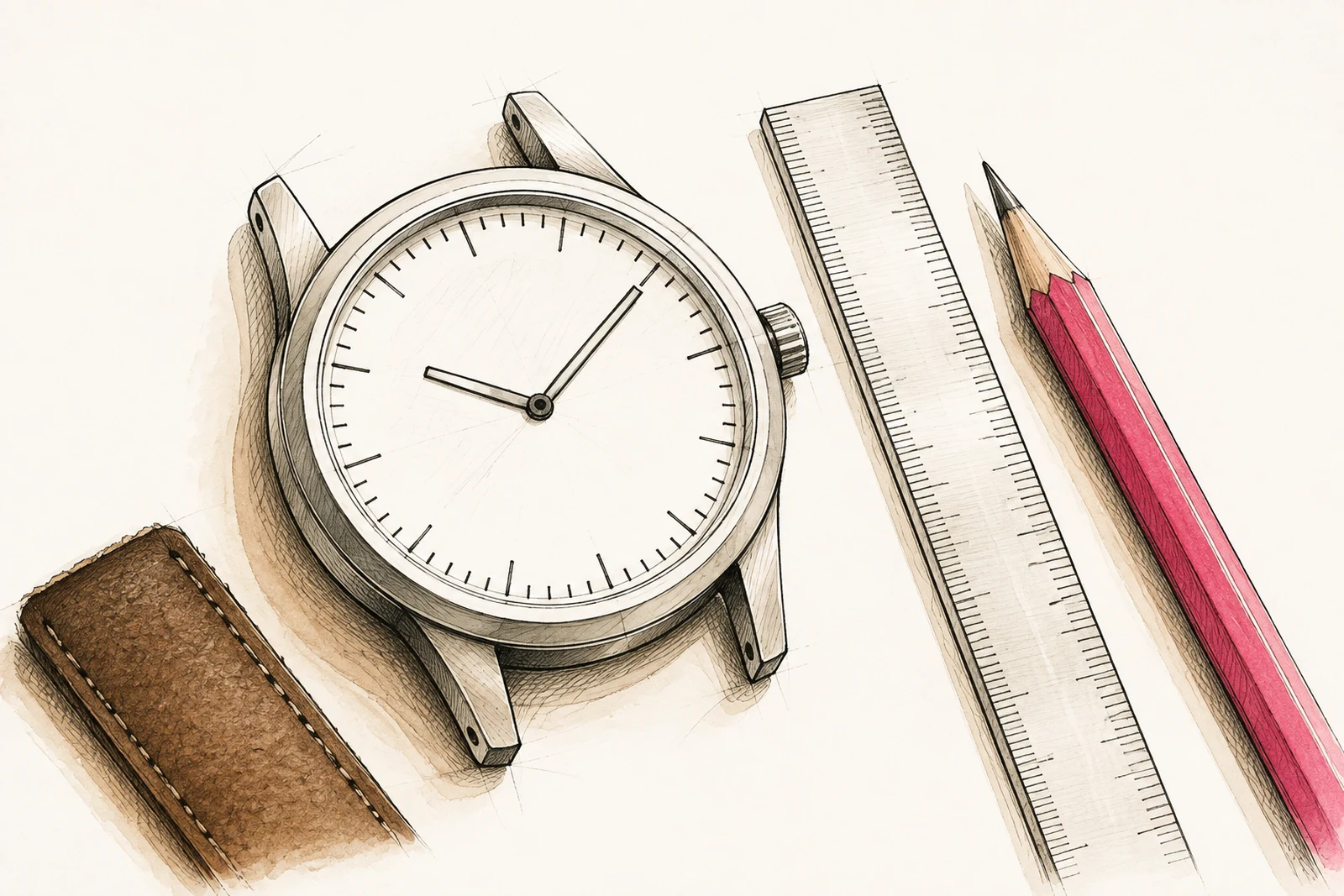
A replacement strap starts with a measurement at the watch, not a guess from its case size. Find the opening between the lugs, confirm the specification for your exact reference, then check the attachment and strap length before ordering.
Find the two inside faces
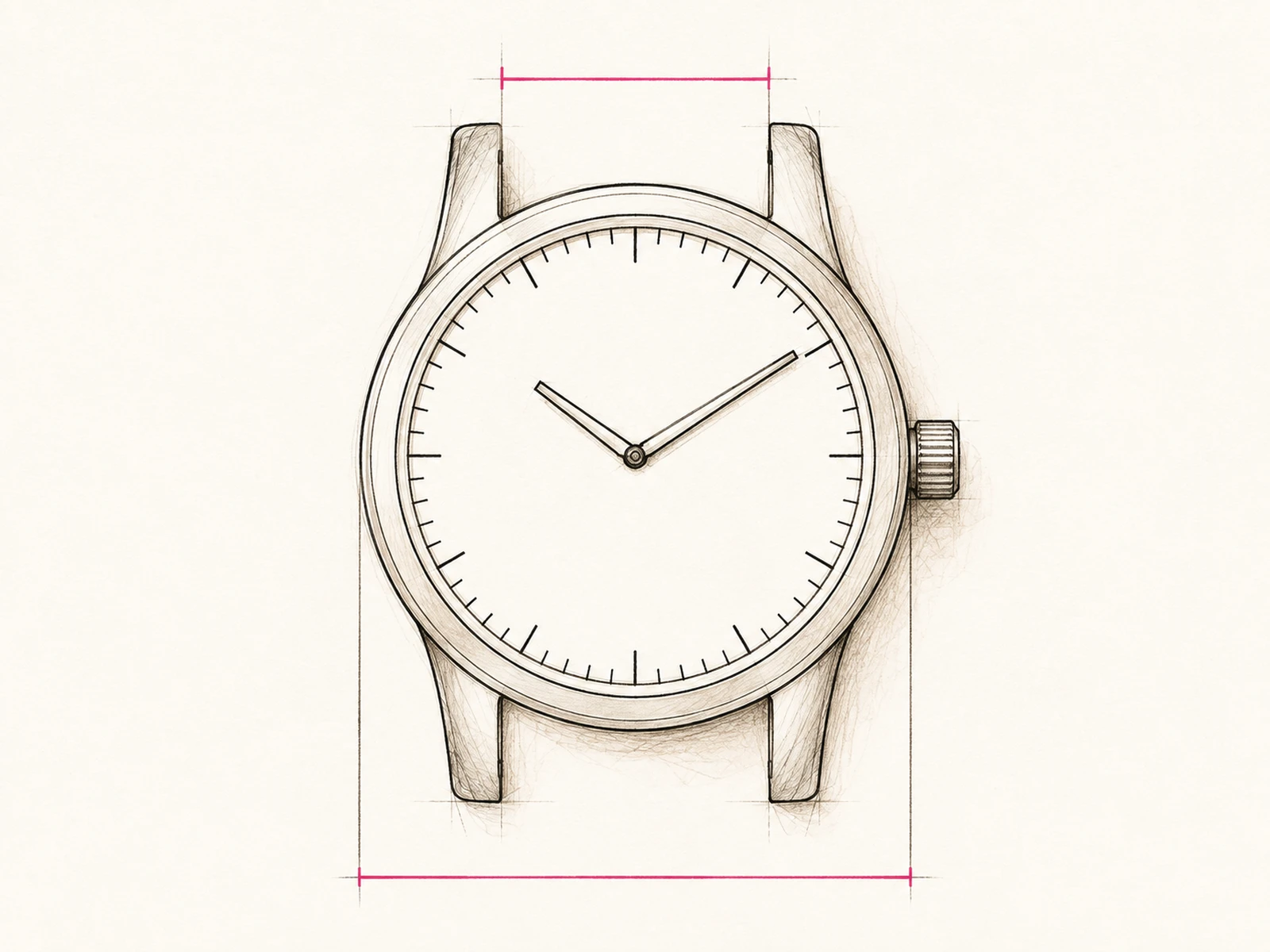
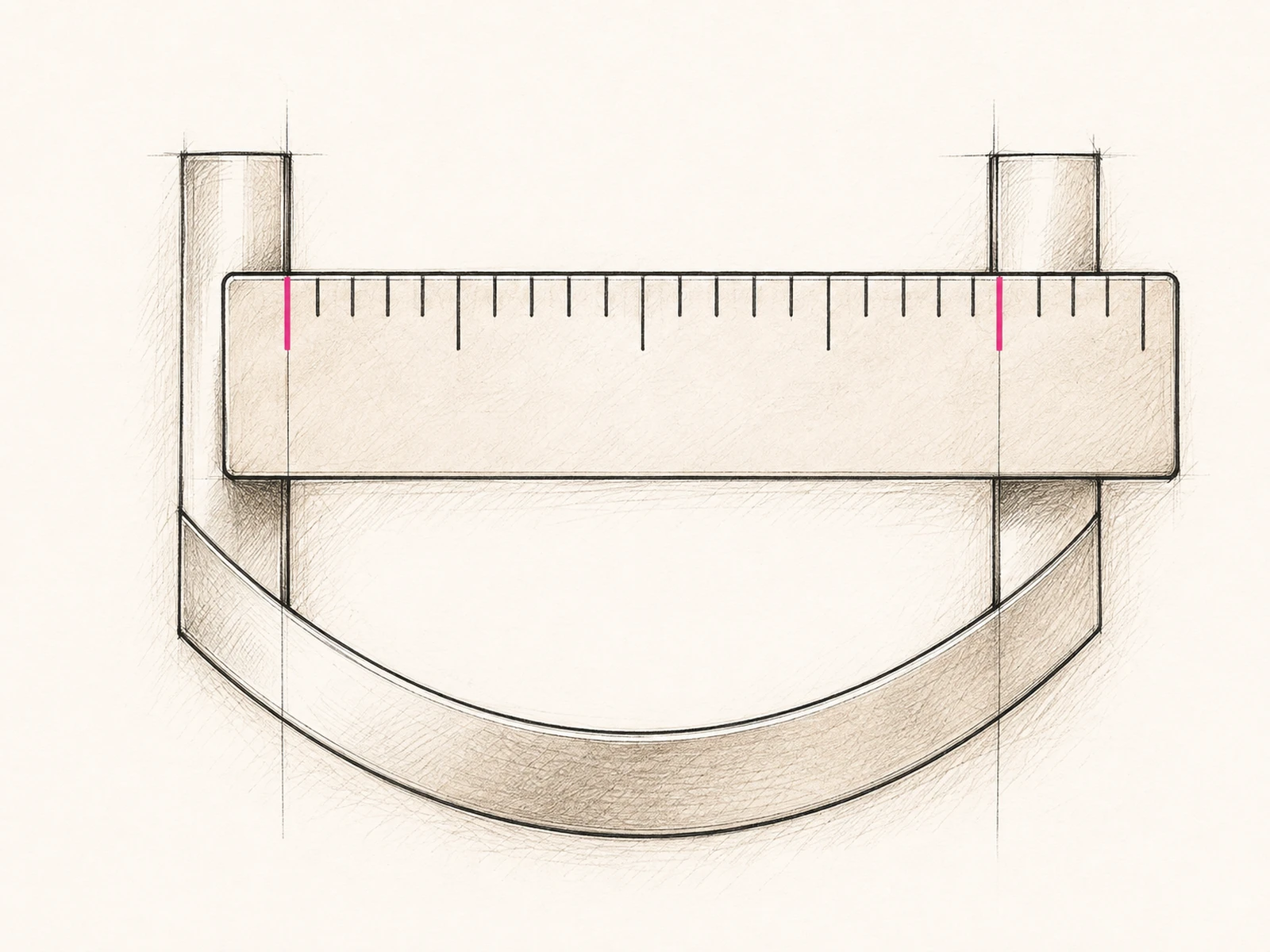
The lugs are the projections that hold the strap. Lug width is the distance between their inside faces at the attachment point, measured in millimetres. Do not measure across their outer edges, across the dial, or from the top lugs to the bottom lugs.
The drawing uses a generic 40 mm case with a 20 mm opening. These are two independent dimensions: another 40 mm watch can take a different strap width. Crown & Buckle's sizing guide explains this distinction.
Read a millimetre ruler
Work on a clean, soft surface with good light. If the strap hides the opening, remove it using the method appropriate to its attachment; see our strap-changing tutorial. An unobstructed opening is easier to read than a ruler held over a padded strap.
- Place the ruler across the opening, parallel to the spring bar's axis. Protect polished surfaces from the ruler's edges.
- Align the zero graduation with one inner face. The physical end of a ruler is not necessarily its zero.
- Look straight down at the scale and read the opposite inner face. Avoid a diagonal measurement or a view from the side.
- Lift and reposition the ruler, then repeat. If the reading changes, do not choose a size yet.
Use calipers for an uncertain reading
A suitable caliper can make a close reading easier. Mitutoyo identifies the inside and outside jaws in its illustrated caliper guide. Check its zero with the jaws closed, away from the watch. Use the inside-measuring jaws: insert them into the opening and gently open them until their outer contact faces touch the two inner lug faces. Keep the tool square to those faces and use light contact.
The larger outside-measuring jaws measure an object held between them, such as a removed strap end; they are not the jaws for measuring an internal gap. If the inside jaws cannot reach the attachment point without scraping or forcing, stop and use the manufacturer's specification or ask a watchmaker to measure it.
Separate the watch end from the buckle end
A marking on an existing strap can help. HIRSCH's size guidance describes attachment-width markings on the lining and measuring the strap where it meets the case. Check what the marking means for that manufacturer, especially if there are several numbers.
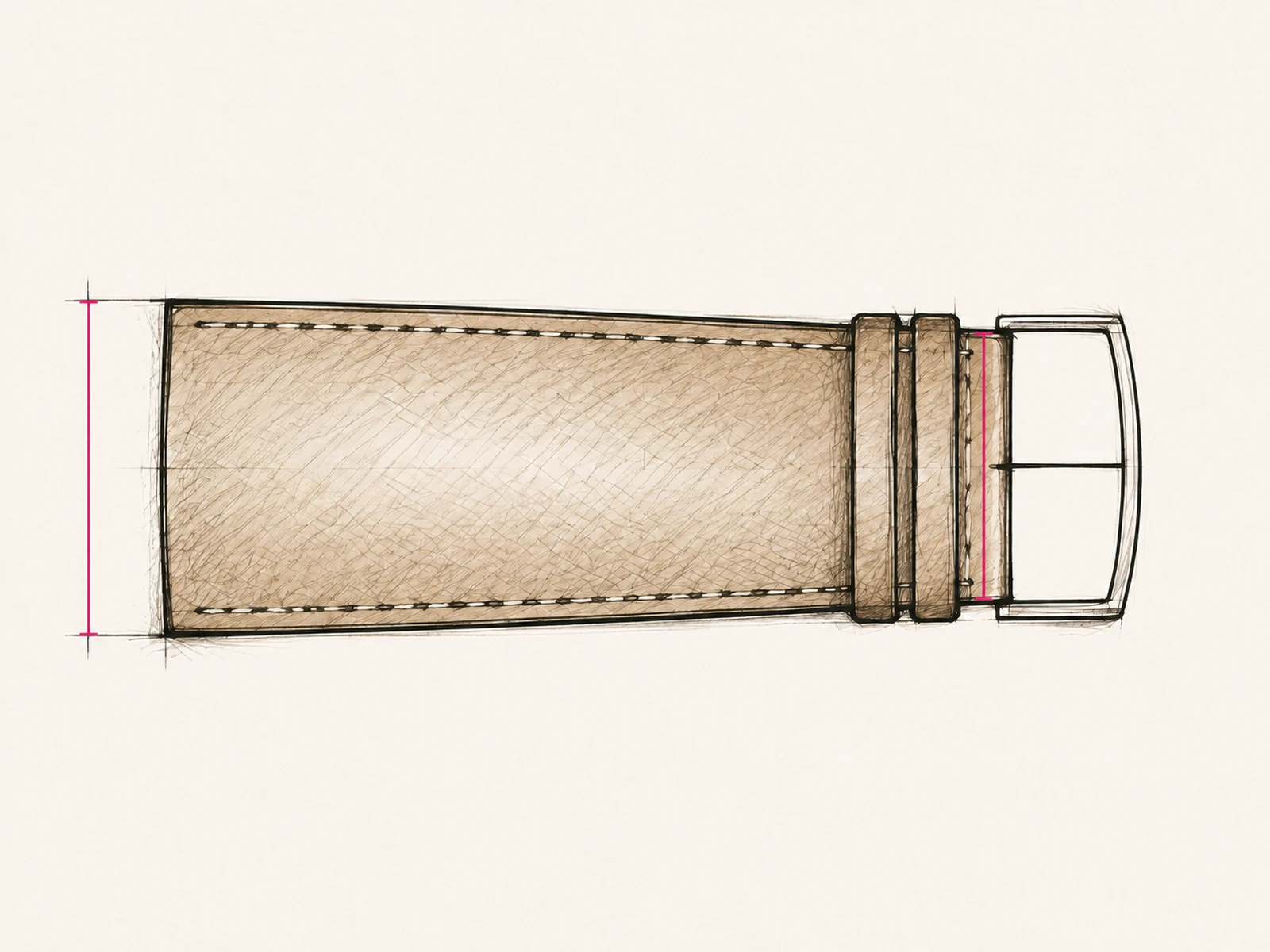
A tapered strap has different widths at its two ends. The watch attachment end can be wider than the leather where it meets the buckle. Measuring the buckle would give the wrong replacement strap width. A worn, stretched or poorly fitting old strap is also a weak reference.
Confirm the reference, then check the fit
Look up the exact watch reference and case-size variant on the manufacturer's site or manual. A family name alone may cover several fittings. 19 mm and 21 mm are whole-millimetre sizes, not half-sizes. If your reading falls between marks, remeasure and resolve the difference instead of rounding to an available size.
Matching the specified width is the first filter. Strap length, straight or shaped ends, spring-bar body and tip dimensions, and clearance from the case still matter. Esslinger's pin illustrations show why attachment hardware cannot be identified by one dimension alone.
Keep a simple note before shopping: exact watch reference, confirmed lug width, attachment type and required strap length. Use our strap catalogue to narrow the width, then check the individual product's fitting details. An integrated or proprietary attachment needs a specifically compatible replacement.
Questions
Is lug width the same as case diameter?
No. Lug width measures the opening for the strap. Case diameter measures the case. The 40 mm case and 20 mm opening in the drawing are an example, not a universal relationship.
Are 19 mm and 21 mm half-sizes?
No. They are whole-millimetre widths. If your reading falls between ruler marks, remeasure and confirm the exact watch reference instead of rounding to a size that happens to be available.
Which width on a tapered strap should I measure?
Measure the end that attaches to the watch. The buckle end may be narrower: the illustrated 20/18 strap has a 20 mm watch end and an 18 mm buckle fitting end.
Does matching lug width guarantee compatibility?
No. Also check the attachment type, end shape, spring-bar specification, clearance and strap length. Integrated and proprietary attachments need a specifically compatible strap.
Sources & further reading 5
The next chapter