History 3 min read
A brief history of Rolex watches
Learn about the origins of this Swiss watchmaker, its historical innovations, and how to find the correct replacement strap size for your model.
The early years in London
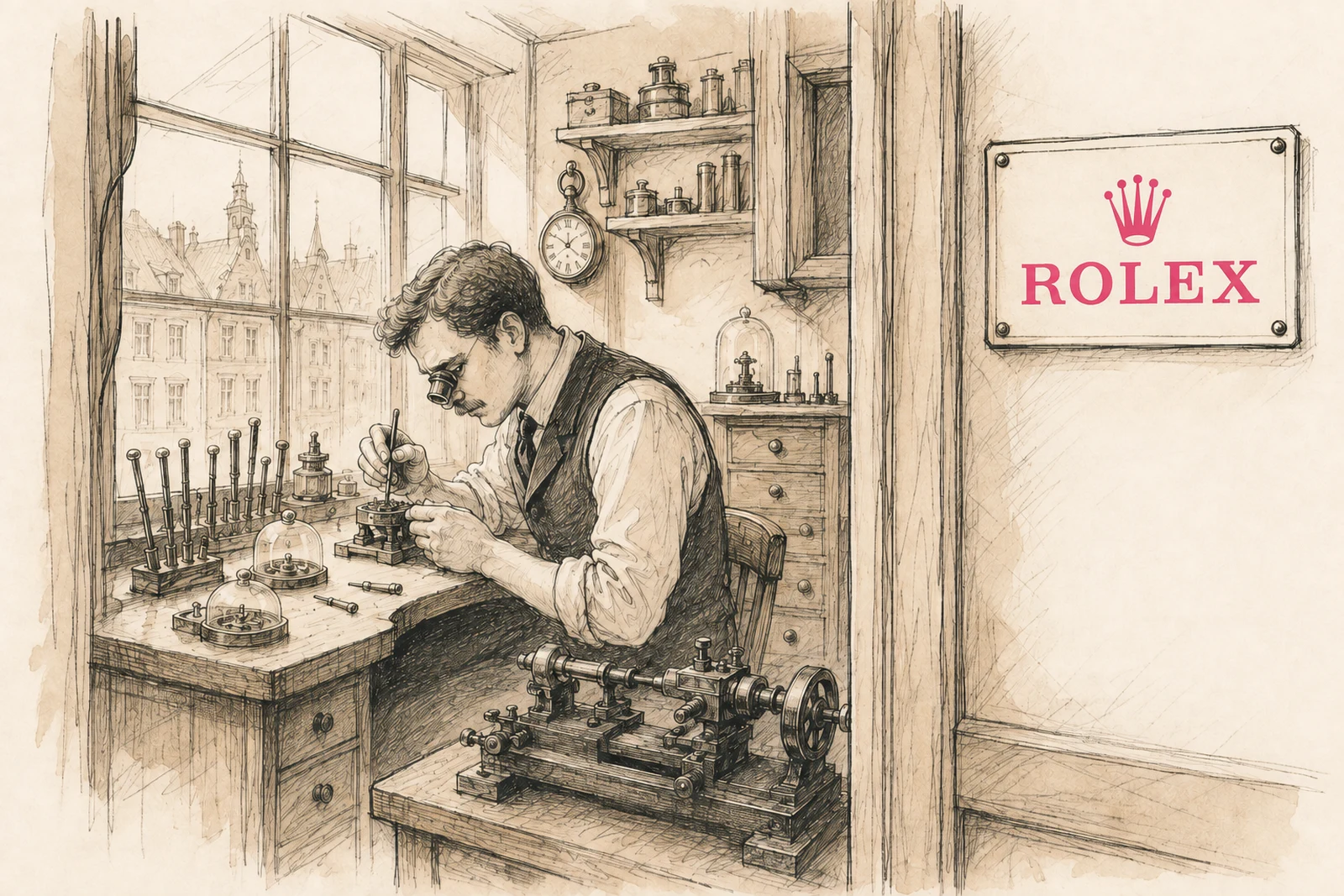
Hans Wilsdorf, a German businessman, and his brother-in-law Alfred Davis, a British investor, founded the company Wilsdorf and Davis in London in 1905. Their primary business activity involved importing Swiss movements made by Hermann Aegler to England. They placed these movements into watch cases made by Dennison and other manufacturers. Jewellers purchased these early wristwatches and placed their own names on the dials, though the casings were marked with the initials of the founders. In 1908, the company registered the brand name Rolex because Wilsdorf wanted a title that was short, easy to pronounce in any language, and fit well on watch dials. He also felt the name sounded like a watch being wound.
Relocation to Switzerland
During the First World War, the company produced specialised trench watches for active service. In 1915, the firm changed its name to Rolex Watch Co. Ltd. After the war ended, the British government imposed high taxes on luxury imports and heavy export duties on the gold and silver used for watch cases. To protect the business from economic instability and high taxes, the founder moved all operations to Geneva, Switzerland, in 1919. The name of the firm was officially changed to Montres Rolex SA and eventually became registered simply as Rolex SA in 1920.
Waterproofing and self-winding innovations
To prevent dust and moisture from damaging watch movements, the company focused on solving technical challenges. In 1926, a third-party manufacturer produced a waterproof and dustproof watch case for the brand, which was named the Oyster. To demonstrate its resistance to water, Rolex submerged these models in aquariums at key retail locations. In 1927, British swimmer Mercedes Gleitze swam the English Channel wearing this model on her necklace. In 1931, the company patented a self-winding mechanism called the Perpetual rotor, which used gravity to wind the watch and created the practical automatic timepiece known as the Oyster Perpetual.
Wartime history and military watches
From 1935 until 1945, the manufacturer supplied specialised diving watches to Italian underwater demolition teams. These watches were distributed through a retailer in Florence. During the war, the Italian team used these watches while sinking British battleships. Hans Wilsdorf, who had acquired British citizenship, faced investigation by Swiss police in 1941 under suspicion of being a Nazi sympathiser. Although Swiss authorities found no suspicious activity, Wilsdorf began offering watches to Allied prisoners of war held in German camps. This initiative was likely an attempt to gain favour with the British government and avoid being blacklisted.
Modern ownership and expansion
Control of the company shifted to the private Hans Wilsdorf Foundation in 1960, which still owns the business today. The corporation and its subsidiary Montres Tudor SA design, manufacture, and service wristwatches sold under both brand names. The business has continued to expand its commercial footprint in recent years. In 2023, the firm agreed to buy its long-term retail partner Bucherer. Following this acquisition, construction began on a new affiliate building on Fifth Avenue in Midtown Manhattan, New York City, in 2024 to strengthen its retail presence near Billionaires' Row.
Straps for Rolex watches
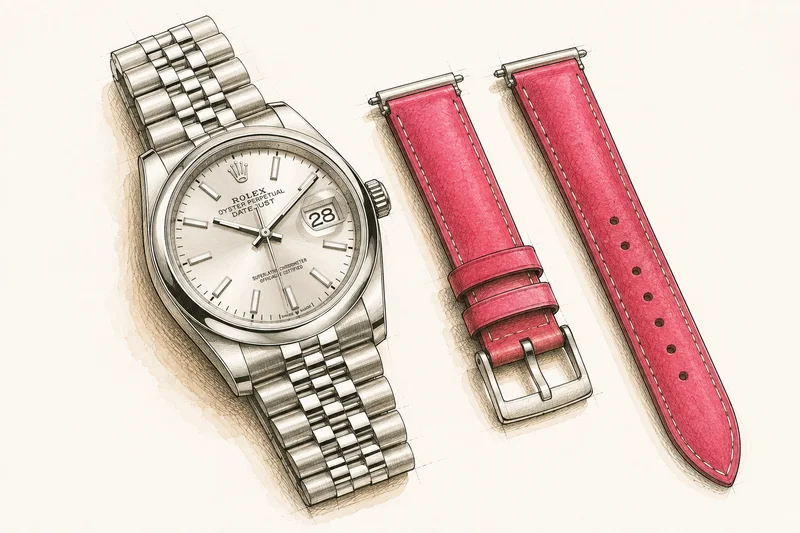
Our database contains 3586 watches from this Swiss manufacturer, featuring models from families like the Datejust, Day-Date, and Daytona. The median case diameter across these pieces is 36 millimetres. When you want to change the look of your watch, finding the correct straps depends entirely on the lug width. A 20 millimetre width is the most common size, accounting for 49 percent of the catalogued models. For these watches, owners can choose leather or rubber options to suit yellow gold, rose gold, or stainless steel cases.
Questions
Where was Rolex originally founded?
The company was originally founded in London, United Kingdom, in 1905 by Hans Wilsdorf and Alfred Davis. It moved its operations to Geneva, Switzerland, in 1919 due to unfavourable economic conditions and high import taxes.
What was the first waterproof Rolex watch?
The first waterproof and dustproof model was the Oyster, introduced in 1926. To prove its water resistance, swimmer Mercedes Gleitze wore the watch while swimming the English Channel in 1927.
How do I choose a replacement strap for my Rolex?
You must measure the lug width of your watch case. A large portion of the models catalogued on our platform require a 20 millimetre strap, which fits popular families like the Datejust and Daytona.